Imagine a classroom where every child receives a worksheet that adapts to their pace, the teacher instantly knows who’s struggling with a concept, and children learn through interactive activities shaped by intelligent software. No longer science fiction — this is the future of learning unfolding today, thanks to artificial intelligence (AI). But what does that mean for our youngest learners—the preschooler identifying colours, the kindergartner practicing phonics, the early‑primary child building reading fluency—and what role do teachers and parents play in this evolving landscape?
In this post, we explore how AI is reshaping classrooms, shedding light on the opportunities, the challenges, and what parents, teachers and educators can do now to harness the change. We’ll unpack key trends, real‑world examples, and concrete take‑aways, especially for the world of worksheets, early learning and foundational skills.
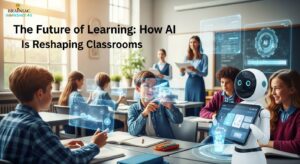
Why AI Is Becoming Essential in Education
Traditional classrooms have long carried a familiar tension: a teacher juggling a large class of children, each with different learning needs, varying paces of progress, and diverse backgrounds. For early years (preschool to Class 5), these differences are especially pronounced: some children may be mastering phoneme blending while others are practising fine‑motor skills for worksheet activities; some may engage quickly with colours or shapes, others need scaffolded repetition. Teachers strive to meet every child—but human capacity is finite.
As education technology advances, artificial intelligence is stepping in to help personalise, streamline and scale aspects of teaching and learning. For example:
- More than 60 % of educators in India report they are adopting AI tools for student‑management and classroom tasks.
- Globally, about 86 % of students say they are using AI tools in their studies; in U.S. classrooms ~60 % of teachers report AI use in 2024‑25.
Analysts estimate the AI in education market will reach $6–7 Billion by 2025, reflecting the scale of investment and demand.
Why is this surge happening now? Several forces converge:
- Diverse learner needs: More children are entering school with varied readiness levels (especially post‑pandemic) and teachers need tools to differentiate instruction.
- Teacher workload pressures: Teachers spend large amounts of time on planning, generating worksheets, grading tasks — time that could be used for direct interaction with children. AI can help relieve some of this burden.
- Future‑skills demand: The world children will grow into demands creativity, flexibility and digital literacy — not just rote memorisation. AI helps shift the classroom toward those skills.
- Technological readiness: Cloud, mobile access and AI models are more accessible than ever — making integration more feasible, even in younger‑learner contexts.
AI isn’t just for high school or university — it’s progressively entering the foundational years and changing the very nature of worksheets, teaching feedback and individualized support. The question isn’t will AI reshape classrooms — it’s how you can integrate it wisely, especially when working with young children.
How AI Is Reshaping Classrooms
Let’s discuss how exactly AI is influencing the classroom experience. We’ll look at four major strands: personalised & adaptive learning; evolving teacher roles; analytics & efficiency; and preparing students for future skills.
a) Personalised & Adaptive Learning
One of the most exciting benefits of AI in classrooms is the ability to personalise learning at scale. Traditional worksheets are static: the same sheet for every child. With AI, worksheets and activities can adapt in real‑time (or near‑real‑time) to a child’s responses: if the child struggles with letter “b” in phonics, the next sheet gives extra practise; if the child is breezing through colour‑recognition, the system introduces a new challenge.
Studies show that such adaptive approaches boost engagement and outcomes. For example, AI‑powered tutoring systems report improved outcomes when tailored to individual learners.
You can leverage AI‑powered tools to create multiple levels of a worksheet: a base level, one with scaffolding, one more advanced. It means that each child’s worksheet becomes a better match for their pace — reducing boredom for fast learners and frustration for slower learners.
b) Teachers’ Roles Evolving
AI doesn’t replace the teacher — it changes the teacher’s role. Instead of simply delivering content and marking papers, teachers become facilitators, mentors and orchestrators of learning. The human‑child relationship remains central: children respond to adult feedback, motivation, emotional support. AI supports, rather than supplants, these human elements.
For example, by automating worksheet variation or grading simple tasks, a teacher can spend more time talking with children about how they feel about learning, giving personalised feedback, organizing group activities, and nurturing social‑emotional growth.
Research backs this shift: AI can make worksheets smarter — and free teachers to interact more deeply with children rather than being stuck in endless copying, grading and photocopying cycles. It can reduce time spent on administrative tasks so teachers focus more on pedagogy.
c) Efficiency, Automation & Analytics
AI’s third major contribution is efficiency and analytics. Let’s break down what this means in the classroom context:
- Automated worksheet generation: AI can pull from a database of phonics, colours, shapes, reading items and generate differentiated worksheets quickly.
- Auto‑grading and feedback: For more objective tasks (matching, fill‑in‑blanks, multiple‑choice), AI can provide immediate feedback, freeing teacher time. Surveys show that teachers using AI tools save hours each week.
- Data analytics: AI systems can track which children repeatedly struggle with certain sounds or skills, flag trends (e.g., 3 children keep missing the “sh” digraph), and provide insights to the teacher. According to one education systems paper: “AI‑powered data … contributes to a better understanding of students’ performance” and allows teachers to focus on interactive, student‑centred work.
- In practical terms for your audience: Imagine a dashboard where you see that class child A missed 4 out of 5 items on worksheet #12 (colours), so next session you pull a targeted worksheet for that child while others proceed. Or imagine generating 3 tiers of reading‑worksheet sets automatically for phonics groups. The time savings can mean better interaction, more meaningful grouping, and smoother transitions.
d) New Pedagogies & Skills for the Future
Finally, AI is changing what we teach and how we teach it. In a world where information is abundant and change is rapid, rote memorisation is less valuable. Instead, children need to learn how to learn — to ask questions, think flexibly, use digital tools, collaborate, reflect.
A recent study found that students engaging with generative‑AI aided learning need critical thinking, AI literacy and ethical awareness.
In early years, this means we can start inculcating meta‑skills: “I notice I’m stuck on this sound — what strategy can I use?” “How can I check if the AI‑generated worksheet makes sense for me?” “If a digital tool gives me options, how do I pick the best one?” Incorporating these into your worksheet and video‑guide practice sets prepares children for future learning paths.
Real‑World Examples & Case Studies
Let’s bring the ideas to life with concrete examples and case studies:
- In a U.S. K‑12 survey, ~60 % of teachers reported using AI tools during the 2024‑25 school year. Teachers who used AI weekly estimated saving up to six hours per week from tasks such as lesson planning, worksheet prep and grading.
- In one educational technology review, teaching and learning systems with AI‑driven analytics allowed teachers to detect learning gaps earlier and adjust instruction. One paper noted: “such standard administrative activities can be taken over by AI systems allowing the teacher to commit more time to developing an interactive and student‑centred classroom.”
- On the global student side: a recent survey found 86% of students are using AI in their learning.
- In India: the report by TeamLease EdTech found that 63.61% of educators believed AI is crucial for preparing students for an AI future, and 70.85% believed AI has a more profound impact than the smartphone revolution.
While these examples come from broader education all‑ages contexts, the lessons apply well to younger learners and to your practitioner audience. For instance, you could spotlight one classroom where the teacher used an AI‑worksheet generator to build 3 levels of phonics worksheets for 20 children in 20 minutes — and used the freed time to work in small groups with children who needed extra help.
Benefits of AI in Classrooms
Let’s summarise the key benefits — and this is where you’ll want to speak directly to your audience of worksheet‑creators, teachers and parents.
- Personalised learning for each child: Worksheets and tasks adapt to the child’s level, pace and needs. This reduces boredom for quick learners and frustration for others, improving engagement and confidence.
- Increased engagement and motivation: When tasks are well‑suited to each child, they feel “I can do this” instead of “I’m lost” or “this is too easy.” AI can support interactive, responsive learning flows.
- Reduced teacher workload: Routine tasks (worksheet generation, formatting, basic grading, data tracking) are partly automated — freeing teachers to focus on one‑on‑one interactions, group work, social‑emotional support and creative instruction.
- Data‑driven insights: Teachers gain access to patterns and analytics (e.g., child X repeatedly misses “ph”, child Y flies through colour tasks) enabling targeted intervention.
- Preparation for future skills: Early exposure to digital tools, adaptive learning, metacognitive thinking builds a foundation for lifelong learning in a world shaped by AI and change.
For your readers, each of these can translate into action: use AI‑enhanced worksheet generation; monitor analytics dashboards; design small‑group teacher time instead of teacher’s desk time; encourage children to reflect: “What did I find hard? What pattern am I noticing?” — supported by AI data.
Challenges & Considerations
It’s important to present a balanced view. While AI offers many benefits, there are real challenges—especially in early‑years settings and in contexts like India or low‑resource classrooms.
- Equity & access: Not all schools or homes have devices, reliable internet, or teacher training. AI‑tools may inadvertently widen the gap between children with access and those without. For instance, one survey found many urban teachers had not received AI training.
- Reduced human contact / over‑dependence: Especially in early years, the adult‑child interaction is central — language development, social‑emotional growth, peer play. Over‑reliance on AI risks sidelining the human element.
- Ethics, data privacy, bias: AI systems reflect the data they were trained on and may introduce bias. Schools need clear policies on student data, consent, and tool safety. For example only ~10 % of schools globally reported having guidelines on AI use.
- Teacher training and cultural fit: Teachers must understand what the AI does (and doesn’t do), how to interpret analytics, how to scaffold and intervene. A survey found that while many teachers used AI, workload remained unchanged because they lacked training.
- Critical thinking & depth of learning: If children rely on AI‑generated answers without applied thinking, their metacognitive growth may suffer. One article asks: does AI support or hinder literacy development?
- Curricular alignment: Introducing AI‑tools without aligning pedagogy, worksheets, teacher roles, assessment systems can lead to mismatch and frustration.
For your audience, emphasise that while AI is a tool of immense potential, it’s not a plug‑and‑play miracle. Successful integration requires thoughtful direction: teacher training, infrastructure, ethical frameworks, and human‑centred pedagogy. For younger children, adult oversight remains essential.
Future Outlook – What’s Next?
What can we expect in the coming years? Here are emerging trends and what they mean for primary‑school and early‑learning contexts:
- Generative AI for content creation: Tools that generate worksheets, reading passages, questions, activity prompts on the fly will become more common. Teachers using these will gain speed and variety.
- AI‑driven multilingual support: In multilingual countries like India, AI will help generate worksheets and interactive tasks in local languages—opening doors for children in under‑served linguistic contexts.
- AI integrated into early childhood education: From kindergarten and preschool, simple AI‑tools may support phonics practice, letter/colour recognition apps, pronunciation feedback, learning analytics.
- Global policy and governance: Governments will increasingly develop AI‑in‑education strategies, fund teacher‑training initiatives and develop tool‑kits for safe, equitable deployment.
- Parents and home‑learning integration: As more learning happens at home (or in hybrid models), AI‑tools aligned with worksheet‑based home‑practice will become vital. For parents you could see “AI‑worksheet bundles” that adapt at home between school tasks.
- Augmented teacher professional development: Training will shift from “how to use the tool” to “how to make the tool work for my children, in my context, with my worksheets”.
Implications & Actionable Advice for You
Here are some practical recommendations for teachers, worksheet‑creators, parents working with young children:
For Teachers / Worksheet‑Creators
- Explore AI‑powered worksheet generation tools: For example, create 3 levels of a phonics worksheet — scaffolded, independent, enrichment — and let the child move from one to the next based on AI data.
- Use analytics: Ask what data your platform or tool gives you. For example, which items were missed most often? Which child needs extra support? Use that to plan next‑day group rotations or differentiated tasks.
- Retain human touch: Use the time saved (through automation) to interact with children: conversations, one‑on‑one feedback, peer group work, social‑emotional check‑ins.
- Scaffold meta‑skills: On worksheets, embed prompts like “What did you find tricky today? What strategy did you try?” Encourage children to reflect on their own learning, supported by AI‑driven feedback.
- Build teacher‑training routines: Make time weekly for yourself or with staff to review how AI‑tools are being used, what works / what doesn’t, share peer insights, adapt your approach.
For Parents
- Ask about AI‑tools being used: If your child’s school or you as a home‑educator are using worksheet platforms with AI, ask what data is being collected, how it supports your child, and how you can access feedback.
- Support home‑practice: Use AI‑generated differentiated worksheets at home — perhaps the system suggests extras for your child’s current need. Then you, as the adult, oversee, prompt discussion and encourage reflection.
- Focus on human‑child interaction: Even with AI‑tools, your time reading, discussing, asking “why” and celebrating effort remains the most critical factor in early years.
- Extend the conversation to meta‑thinking: Encourage children: “What did I do today that made learning easier? What will I try next time?” These questions help build lifelong learning habits.
Conclusion
We are at an exciting junction in education: AI is no longer a distant concept—it’s actively reshaping classrooms today. For young learners (preschool to Class 5), and for many parents, teachers and educators working with worksheets and foundational skills, this transformation offers a powerful opportunity: smarter, more responsive worksheets; data‑driven insights; less administrative burden; more meaningful teacher‑child interaction; and a stronger foundation for future learning.
At the same time, it demands our thoughtful attention: ensuring equitable access, maintaining the human element of education, training teachers, aligning pedagogy, and safeguarding ethics and data privacy. The technology is a tool—not a substitute—for real teaching and real human connection.
So here’s your call to action:
- Explore one AI‑tool this term that supports differentiated worksheets or analytics in your context.
- Pilot it with one group of children, track what changes, and reflect: How did it help the worksheets? How did it free your time? What did children say?
- Share your insights on your next Brainiac Worksheets video or blog post—what worked, what you adjusted, what you want next.
- Ask yourself the question: Am I using AI to enhance the worksheet‑learning experience, or allow it to distract from the human engagement that is so critical at this age?
Finally, I leave you with a thought‑provoking question to ponder and share with your community:
“In a classroom where AI adapts to each child’s pace, what will the teacher’s role be — and how will the child’s sense of agency and curiosity grow?”
If you enjoyed this post, please share it with your teacher‑colleagues, parent‑groups and on your social‑feed. It’s part of a larger conversation about how we can build truly future‑ready classrooms for our children—and I hope you’ll return to the Brainiac Worksheets website for more practical, worksheet‑based strategies that harness this change.
Here’s to teaching, learning and learning how to learn—all supported by smart tech, but powered by human care.
Frequently Asked Questions (FAQs)
Q. What are the benefits of using AI in education?
Ans: AI offers several powerful benefits in education, including personalized learning that adapts to each student’s pace, automated grading that saves teachers valuable time, and real-time performance insights that help identify learning gaps early. It also enhances student engagement through interactive tools, supports children with special needs using assistive technologies, and reduces teacher workload by automating administrative tasks. Together, these benefits create a more efficient, inclusive, and engaging learning environment for both students and educators.
Q. Can AI replace teachers in classrooms?
Ans: No, AI cannot replace teachers in classrooms. Instead of replacing teachers, AI acts as a supportive tool that helps educators save time, teach more effectively, and focus on meaningful interactions with students. When used well, AI enhances the teaching-learning process—making classrooms more engaging, efficient, and student-centered.
Q. Are there challenges in implementing AI in schools?
Ans: Yes, implementing AI in schools comes with several challenges, including high initial costs, limited teacher training, and unequal access to technology for students. Many schools also worry about data privacy, responsible AI use, and ensuring that digital tools truly support—not replace—human teaching. Additionally, integrating AI into existing curriculums can be difficult without proper planning and support. Despite these challenges, with the right guidance and investment, schools can successfully adopt AI to enhance learning and improve classroom efficiency.
Q. How can parents support AI-based learning at home?
Ans: Parents can support AI-based learning at home by choosing age-appropriate, reliable AI tools and encouraging children to use them consistently for practice and revision. They can help by setting a balanced screen-time routine, monitoring progress through app reports, and guiding children when they face difficulties. Creating a quiet study space, staying informed about the AI tools their child uses, and communicating regularly with teachers ensures that home learning aligns with classroom goals. With the right support, AI becomes a powerful extension of a child’s learning environment.
Q. Which AI tools are best for early-years education?
The best AI tools for early-years education are those that make learning simple, engaging, and personalized for young children. Popular options include adaptive learning apps like Khan Academy Kids and ABCmouse, AI-powered reading assistants such as Google Read Along, and tools like Duolingo ABC that support early literacy. For teachers, platforms like ClassDojo and Osmo offer interactive, AI-enhanced activities that build foundational skills through play. These tools help children learn at their own pace while keeping lessons fun, visual, and developmentally appropriate.
Q. How does AI help students learn better?
AI helps students learn better by offering personalized lessons that match their learning pace, providing instant feedback on assignments, and offering extra practice when needed. It identifies strengths and weaknesses early, so students get targeted support before gaps widen. AI tools also make learning more interactive and engaging through videos, games, and adaptive worksheets. With 24/7 access to AI tutors and guidance, students can review difficult topics anytime, building confidence and improving overall learning outcomes.
Q. How does AI make teachers’ work easier?
AI makes teachers’ work easier by automating time-consuming tasks like grading, attendance, lesson planning, and creating worksheets, allowing them to focus more on teaching and student interaction. It provides real-time insights into student progress, helping teachers identify who needs extra support and who is ready to move ahead. AI tools also offer ready-made resources, personalized learning recommendations, and classroom management support, reducing stress and workload. This efficiency enables teachers to spend more time on meaningful, high-quality instruction.
Q. How is AI expected to shape the future of education?
AI is expected to shape the future of education by creating highly personalized learning experiences, offering real-time insights for teachers, and making classrooms more efficient and inclusive. Future AI tools will adapt lessons instantly, support diverse learning needs, and provide students with interactive, hands-on learning environments through smart worksheets, virtual tutors, and immersive simulations. Teachers will gain powerful tools for planning, assessment, and classroom management, allowing them to focus on creativity, mentorship, and emotional support. Overall, AI will help build flexible, student-centered classrooms that prepare learners for a rapidly changing world.
Q. What AI tools or apps are used most in modern classrooms?
Modern classrooms commonly use AI tools like Google Classroom, Khan Academy, and Microsoft Learning Tools to support personalized learning and streamline teaching. AI-powered apps such as Quizlet, Duolingo, and Grammarly help students practice concepts, improve language skills, and receive instant feedback. For teachers, tools like Gradescope, Turnitin, and ClassDojo simplify grading, track behavior, and improve communication with parents. Many schools also use adaptive learning platforms like BYJU’S, Coursera, and Edpuzzle to offer engaging, self-paced lessons. Together, these AI tools make learning more interactive, efficient, and accessible for every student.
Want to explore more AI-powered learning strategies or download high-quality worksheets for your students?
👉 Visit Brainiac Worksheets for expert resources and practical guidance.
Have questions about integrating AI into your teaching or content creation?
👉 Contact us anytime — we’re here to help you transform learning!
Thank you,